“Where do you live?” the customs official asked, as I crossed the border into Canada. I froze for a moment. That question has become my bugbear in the two months I’ve been living full-time in the van. The brief but obscure answer is, “right here.” Somehow I don’t think the customs official would have appreciated that. I managed to mutter “New Hampshire,” and she waved me through.
Having been informed by an AI-chatbot to anticipate a full inspection of the van, I had allowed a lot of extra time to get through customs. My aim was to complete the four hour drive through northern Maine with an hour and a half to spare before my scheduled ferry to the island of Grand Manan, just off the coast of New Brunswick. I’d eaten the potato and apple in my fruit bowl the day before, having been warned that they would be confiscated. As it turned out, none of the questions the customs official asked had anything to do with the contents of my kitchen, and no one even took a look inside.
I ended up needing all of that extra time though, because did you know THERE’S A TIME ZONE EAST OF EASTERN TIME? It’s called Atlantic Time. The moment I crossed the border, I lost an hour and was at risk of not being allowed to board the ferry. Live and learn.
I made it with minutes to spare, and settled in for the hour-and-a-half ferry ride. As the seas rolled gently, I was reminded of the last time I was on a ferry, returning from a day trip to Hydra Island back to Athens, Greece, when the seas got rough and I was treated simultaneously to an incredible sunset and my fellow passengers vomiting into sick-bags all around me, as I kept my gaze fixed on a distant cloud.
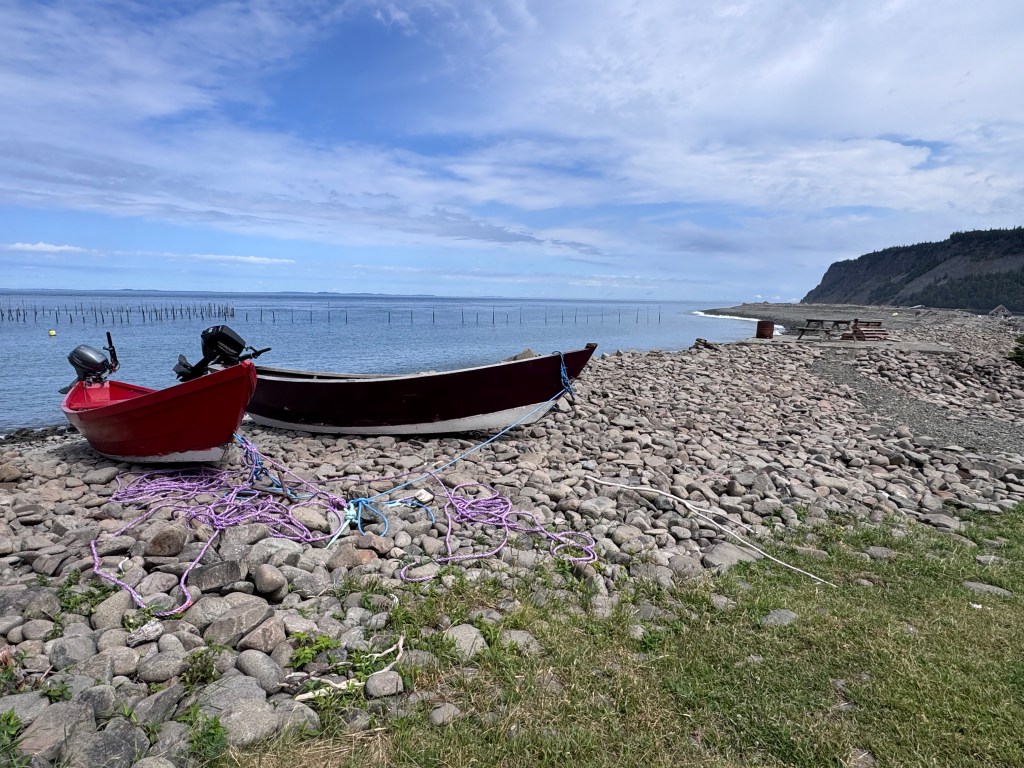
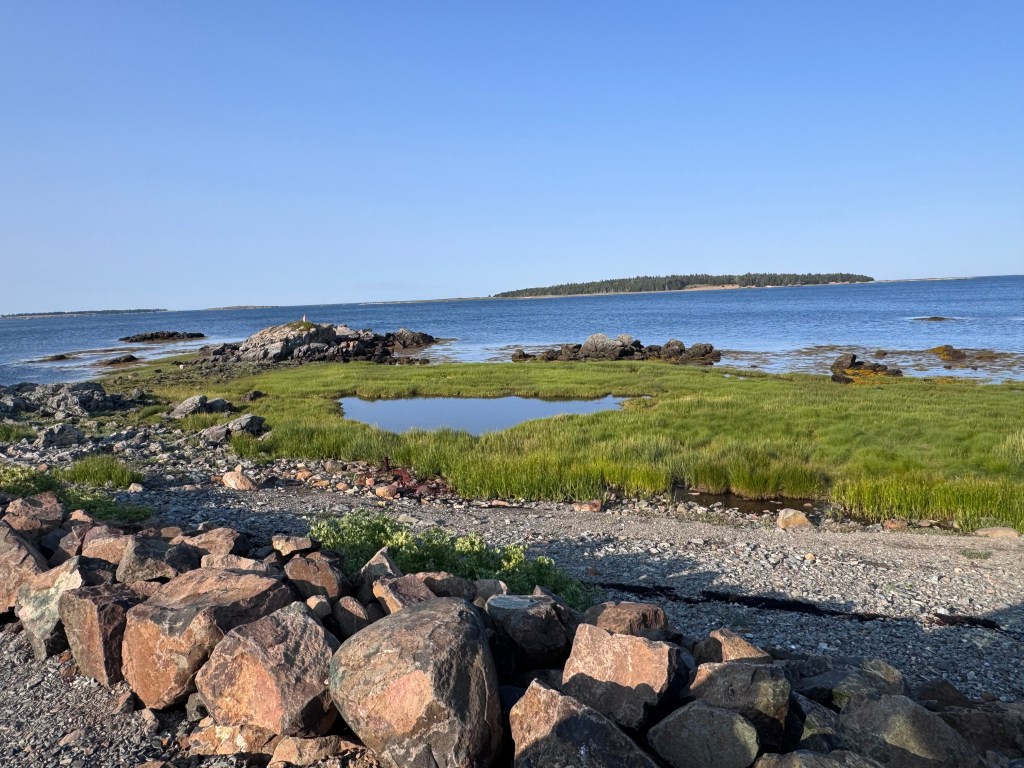
Grand Manan, population 2,500, is an island forgotten by time, where fishing and lobstering are still the primary industry. There are herring weirs and abandoned smokesheds everywhere. I felt an immediate sense of ease as I pulled the van alongside a breakwater on the eastern side of the island, at my Boondockers Welcome host’s campsite. I had a beautiful stretch of beach all to myself, with a fire ring and a big pile of free firewood. That night, as I sat by a campfire with a blanket across my legs, the sky turned dark and the stars emerged by the hundreds.
In the peace of that moment, I made a decision. After a year of dating long-distance, my relationship with Carey was on rocky ground. Knowing that I would have five days in this beautiful place to heal my heart, I let him know that it was over. We had one last tender conversation and said our final goodnights. I am deeply saddened, but I am grateful for the almost three years we had together.
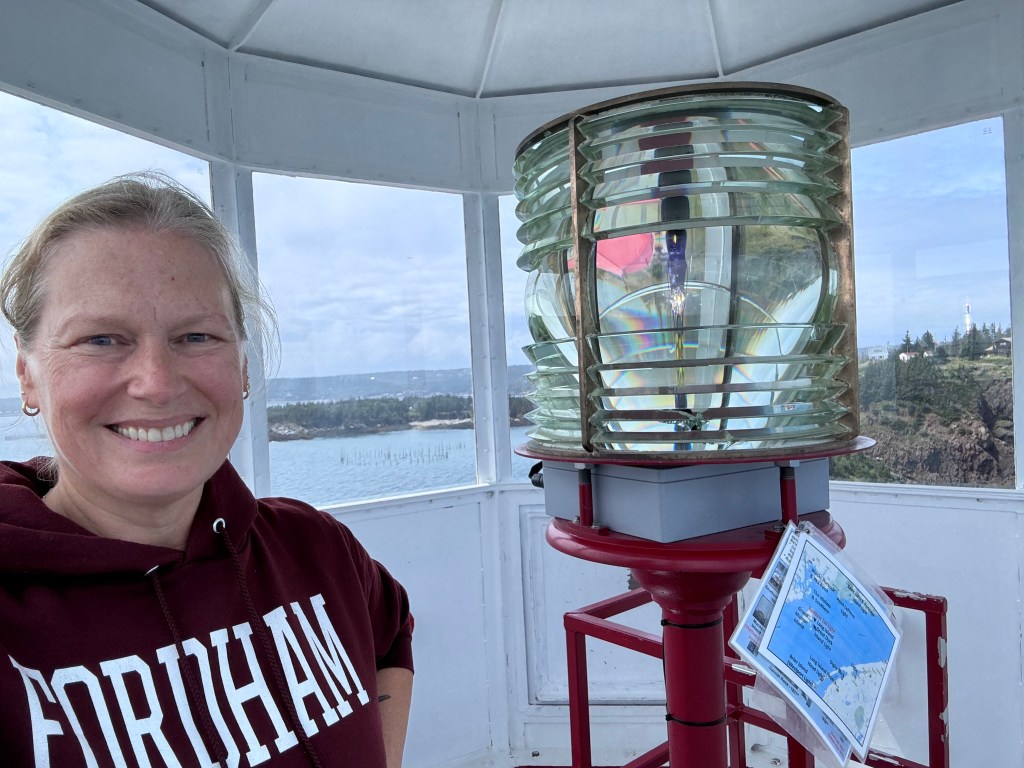
The next day, my first full day on the island, I did very little. I was being gentle with myself, resting, eating, staring out at the sea. My only outing was to go and see a lighthouse. On my second day I woke up to heavy rainfall. I had seen a laundromat in town and needed to wash my clothes. The last time I used a coin-operated washing machine, it took quarters. This one had a sign that said $2.50. I tried feeding my quarters into the slot but it wouldn’t accept them. I texted my host to ask where I could get dollar coins. I can’t remember the last time I saw a dollar coin.
He suggested that I head down to the office of his lobstering business and ask for change. I walked in with my $5 bill and the woman behind the counter turned to a coworker and asked, “What’s the exchange rate for US dollars?” Of course, I thought, I’m not in the US. As it turns out, Canadian dollar coins, or “loonies” as they’re affectionately called, are very common here. I finished my laundry and headed back to the campsite. At dusk, my hosts appeared with an offering of fresh salmon, right out of the ocean. Morton and Susan are the kindest, most generous hosts I’ve encountered in my van travels.
By the third day I was feeling a little less heartbroken and decided to explore the island. I visited a few of the sites I’d read about in travel blogs. I passed a sign for dried dulse, a delicacy I’d heard about on the ferry but had not yet tried. Dulse is a nutritious red seaweed that is dried and used as a seasoning or snack. It can only be harvested during a new or full moon, at the lowest of tides.
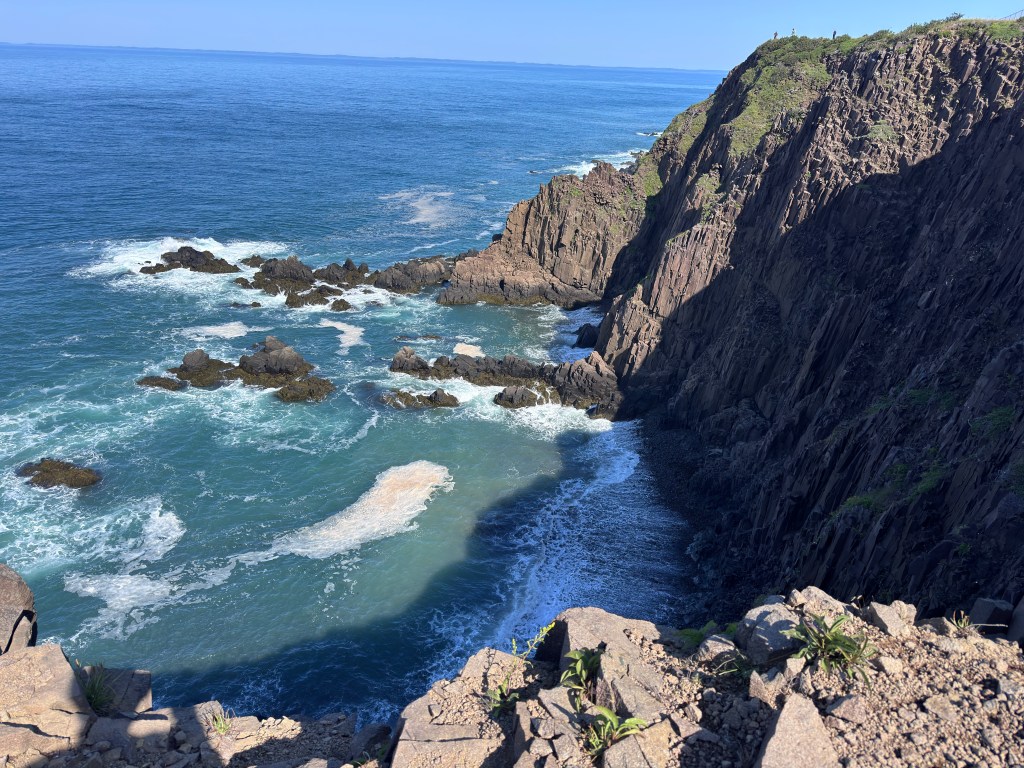
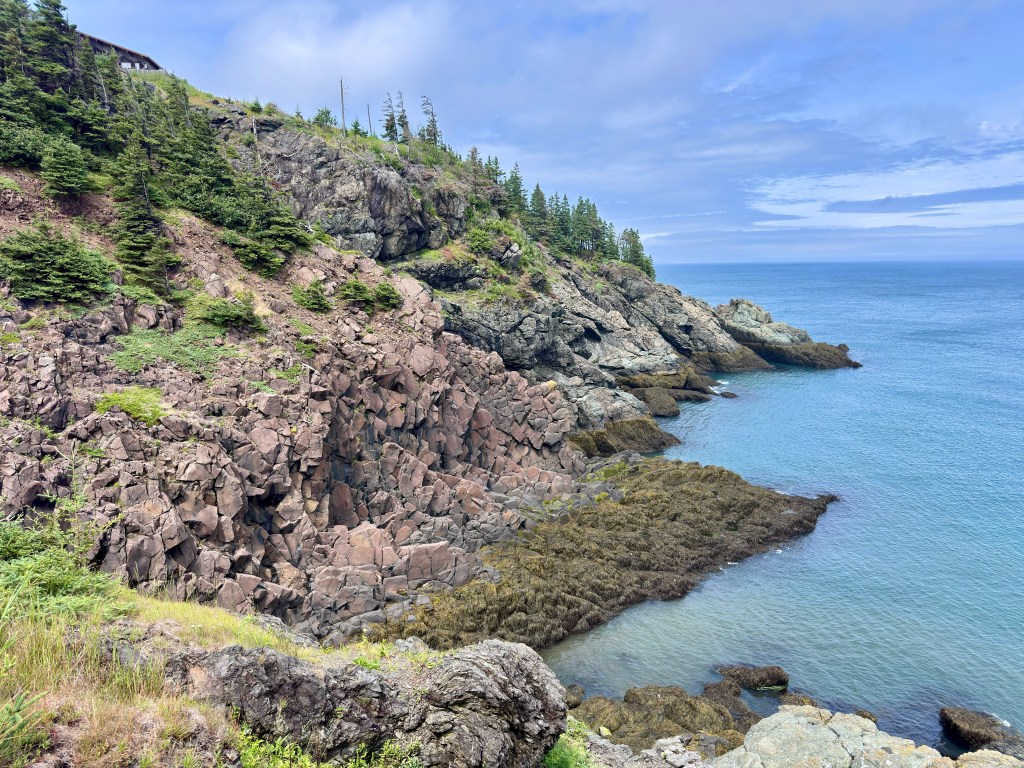
I turned down Dark Harbour Road and stopped at the dulse shed of Green Sea Harvest. The owner, Wayne, turned out to be a generous and gentle soul, giving me a handful to try and a free bag to take with me. I was moved by such kindness, and promptly burst into tears. Poor Wayne was taken aback, but he rolled with it. He spent the next day driving me around the island to share his favorite spots, the ones that tourists don’t usually get to see. We saw baby seals, whales, a blue heron, and an eagle. It is impossible to take a bad photograph on this island.
After five nights in this captivating place, I am so grateful to the island and its kind and generous inhabitants. While I miss Carey very much, the edges of my sadness have softened. Grand Manan gave me the space to heal, and I feel ready for whatever—and whomever—awaits down the road.




Leave a Reply