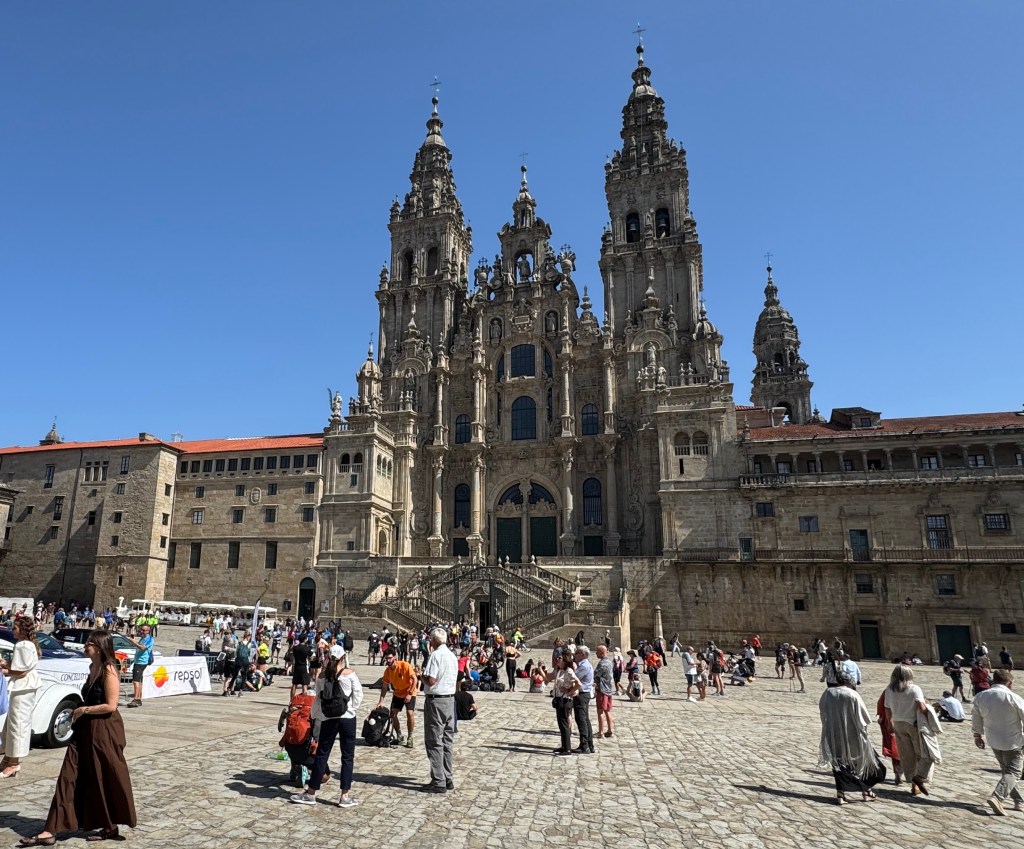
I spent three peaceful and quiet nights in Santiago de Compostela, the place where all the various routes of the Camino de Santiago come together at the Cathedral de Santiago de Compostela, where pilgrims can get their official certificate of completion.
I arrived in the early afternoon, dropped my bags at the hostel, and set out on foot to get something to eat until it was time to check in. I found a cafe a couple streets away with outdoor seating and a simple menu. I sat down, pulled out my kindle, and started people watching. It didn’t take long to realize that the foot traffic was mostly moving in the same direction, right to left. And that the people walking by looked tired and were loaded up with backpacks and walking sticks. Pilgrims! I pulled out my phone and searched, the cathedral was only about a 15 minute walk.
It was surprisingly moving, watching weary hikers close in on the end of their journey. Some had walked for days, others for weeks or even months. And here they were, nearing their final destination. I had no idea when Chad recommended that I visit Galicia how much of a presence the Camino would have on my time there. It came up in nearly every conversation.
I checked into the hostel, got myself settled, and then headed out toward the cathedral. I could hear a street musician playing the bagpipes. I heard cheering. I sat, for a while, and watched the arrivals. Some pilgrims filmed themselves coming into the square, Praza do Obradoiro. They arrived in large and small groups, couples, singles, families. Many burst into tears upon arrival. Others danced and whooped and took selfies.
Every pilgrim I spoke with had an interesting story about what made them want to do the walk, and about their experiences along the way. One night in the common area of the hostel I sat with two middle-aged women, one from Korea and one from Canada, who had bonded over their experience of retiring from their careers the previous year and then deciding to walk.
One had completed 500km (310 miles), the other 800km (497 miles). We connected while talking about simplifying our lives and remaining fully present. When they heard about my experience of selling my furniture and traveling for seven months, one of them suggested I was completing a camino of my own.
I learned that many pilgrims don’t just do this once in their lifetime. The Canadian woman was doing it for the second time. The young woman in the bunk above mine was doing it for the fourth time. Some people had done it seven, or even eight times.
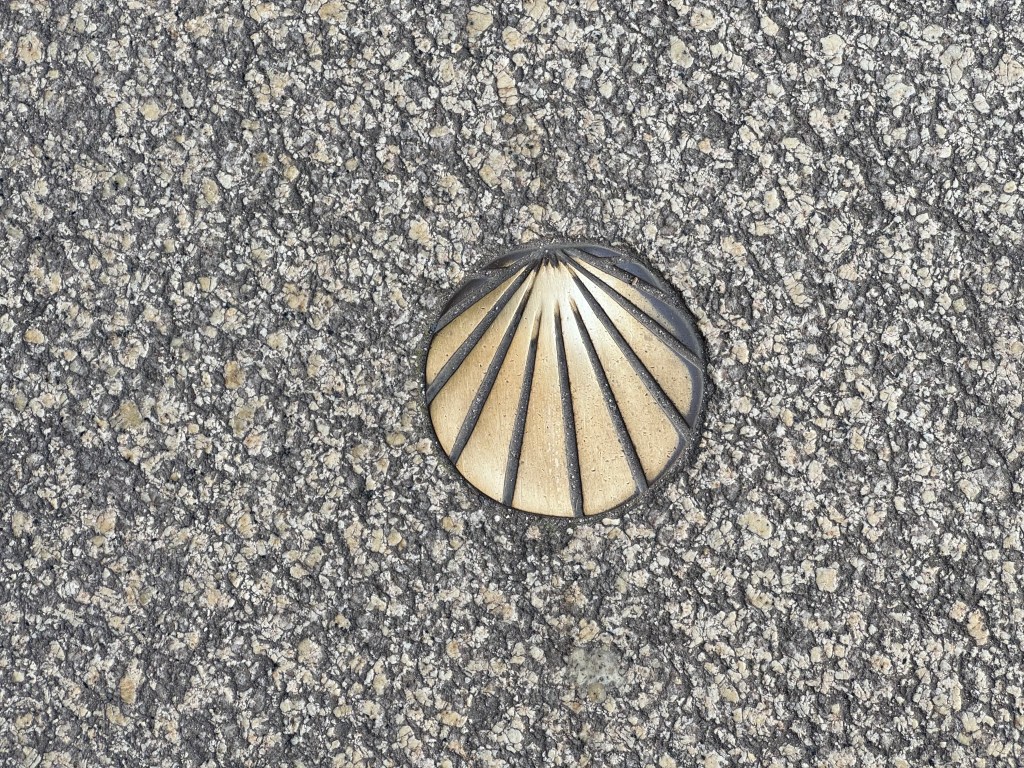
I started to hear about the different routes—Portuguese, French, North, and Primitive. Turns out there are over 200 recognized routes, although most people stick with the 7 or 8 most popular. The routes are represented by the lines on a scallop shell, a symbol you can find in brass markings in the sidewalks and hanging from people’s backpacks.
My last night in Santiago I decided after three weeks eating authentically in Spain and Portugal I was ready for some different food, so I went to Camino Curry, an Indian restaurant down the road from the hostel. Upon hearing that the young waiter was from England, and that the restaurant had only been open for three months, another diner asked how it came to be. “My father walked the Camino last year,” he said simply. The more pilgrims I spoke with, the clearer it became that the Camino doesn’t just end in Santiago—it often changes the course of people’s lives.
Later, the father came out and told his story, of retiring at 50 as the managing director of a global IT firm, feeling a calling to walk, and walking an extraordinary 1,000km (that’s 621 miles!). He carried 2kg (4.4 lbs) of spices and cooked whenever he stopped, inviting other pilgrims to join him for a meal. Two days after he finished the walk and returned home to England, he saw a listing for a restaurant for sale in Santiago and decided that’s what he was meant to do next—feed people as they finished their journey.
I came to Santiago expecting lush green forests and delicious octopus. While I found those, I also found myself surrounded by amazing and inspiring personal stories. I may not have walked the Camino myself, but in a way I am walking one of my own this year. Like the pilgrims, I don’t know exactly what I’ll find at the end—but I know the journey is already changing me.



 Let's Go, Jane!
Leave a comment